
- October 2026
What Is Dedicated Hosting? Benefits, Pros, Cons & More
Learn what Dedicated hosting is, how it works, its types, benefits, costs, and how to choose the right hosting for your website.
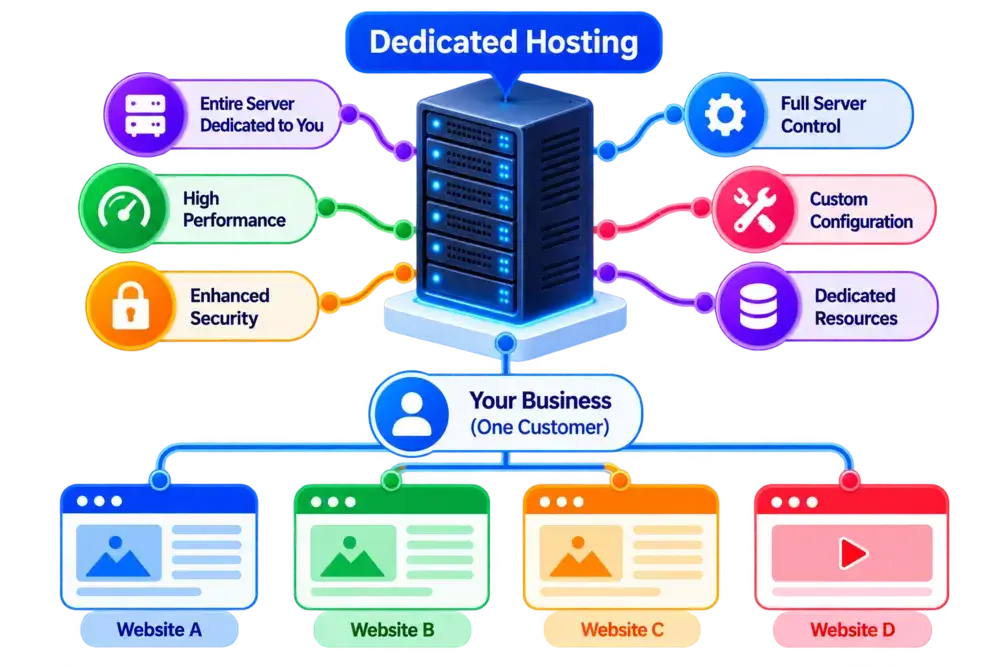
Dedicated Hosting at a Glance
A quick overview of what dedicated hosting offers, how it works, and who it is designed for.
- Editor's Summary
Greater Control
Dedicated Server Resources
Best For
- High-Traffic Websites
- Businesses with Demanding Workloads
- Resource-Intensive Web Applications
- Large E-commerce Stores
What You Should Know
Dedicated hosting gives one customer exclusive use of an entire physical server. Unlike shared hosting, your server’s computing resources are not shared with other hosting customers on the same machine. This provides greater control over server configuration and resource allocation.
However, performance, security, and reliability still depend on the server hardware, software configuration, maintenance, and hosting provider.
Dedicated Server Resources
Exclusive CPU, RAM, and storage for your website.
Greater Isolation
Keep your server environment separate from other customers.
Configuration Control
Customize server settings, software, and resource allocation.
High Performance Potential
Handle demanding workloads with dedicated server hardware.
Disclosure: ElegantEspace is supported by readers like yourself. We may earn an affiliate commission when you purchase through our links. Commissions do not affect our editors’ opinions or evaluations.
What Is Dedicated Hosting?
Dedicated hosting is a type of web hosting that provides an entire physical server exclusively to one customer. Unlike shared hosting, where multiple customers use the same server, dedicated hosting gives you dedicated access to the server’s computing resources.
These resources typically include CPU, RAM, storage, and network capacity. You can use them to run websites, online stores, databases, and applications based on your specific requirements.
Dedicated hosting also offers greater control over server configuration, software installation, and security settings. Depending on the hosting plan, you can manage the server yourself or choose a managed service where the provider handles tasks such as updates, monitoring, and maintenance.
Dedicated hosting can be a suitable choice for high-traffic websites, large e-commerce stores, and resource-intensive applications that require substantial computing resources and greater control over their hosting environment.
How Dedicated Hosting Works
Dedicated hosting works by providing an entire physical server exclusively to one customer. The server supplies the computing resources needed to run websites and applications, while the customer has greater control over its configuration and usage.
Unlike shared hosting, dedicated hosting does not require you to share the physical server with other hosting customers. Depending on the plan, you can manage the server yourself or let the hosting provider handle maintenance and technical tasks.
Here's How It Works:
1. You Choose a Dedicated Hosting Plan
You select a plan based on your requirements, including CPU, RAM, storage, bandwidth, server management, and expected workload.
2. Your Dedicated Server Is Set Up
The hosting provider provisions a physical server with the hardware, operating system, and other resources needed to run your website or application.
3. Your Hosting Environment Is Configured
You or your hosting provider configure the server, install the required software, set up databases, and apply security settings according to your needs.
4. Your Website Uses Dedicated Resources
Your website or application uses the server’s allocated CPU, RAM, storage, and network capacity. These physical resources are not shared with other hosting customers on that server.
5. Visitors Access Your Website
When someone enters your domain name, their browser sends a request to your server. The server processes the request and delivers the appropriate website content to the visitor.
6. You Manage and Upgrade Your Server
You can monitor resource usage, optimize performance, and adjust server settings as needed. Increasing capacity may require upgrading hardware or moving to another server, depending on your provider and plan.
What Are the Benefits of Dedicated Hosting?
Dedicated hosting provides exclusive access to a physical server, giving you greater control over computing resources, server configuration, and the hosting environment.
It can be useful for businesses and websites with demanding workloads, specific technical requirements, or resource needs that exceed what shared hosting can comfortably support.
1. Dedicated Server Resources
With dedicated hosting, your server’s CPU, RAM, and storage are not shared with other hosting customers on the same physical machine.
This gives you greater control over how those resources are used and helps reduce competition for server resources from unrelated customers.
It can benefit high-traffic websites, large online stores, databases, and applications with consistent computing demands.
2. Greater Configuration Control
Dedicated hosting gives you more control over your server environment than most shared hosting plans.
Depending on your access level and hosting plan, you may be able to:
- Choose or configure the operating system
- Install compatible software and applications
- Adjust server settings
- Configure security rules and access permissions
- Optimize the environment for specific workloads
This flexibility is particularly useful for developers and businesses with specialized technical requirements.
3. High Performance Potential
Dedicated servers can provide substantial computing power for resource-intensive websites and applications.
Because you have exclusive access to the physical server’s resources, you can configure the environment around your workload without competing with other customers on that machine.
Actual performance still depends on the server’s specifications, software optimization, network quality, and workload.
4. Greater Server Isolation
Your dedicated server operates separately from other customers’ hosting environments at the physical-server level.
This reduces exposure to resource contention caused by unrelated customers sharing the same machine and gives you more control over security configurations.
However, dedicated hosting does not automatically make a website secure. Regular updates, access controls, firewalls, and proper server maintenance remain essential.
5. Support for High-Traffic Websites
Dedicated hosting can provide the resources needed to handle demanding websites and applications when the server is configured appropriately.
It may be suitable for:
- High-traffic business websites
- Large e-commerce stores
- Popular membership platforms
- Content-heavy websites
- Applications with resource-intensive workloads
The server must still have sufficient capacity to handle traffic peaks. A dedicated server can become overloaded if its resources are inadequate or poorly configured.
6. Greater Software Flexibility
Dedicated hosting can support a wide range of software configurations, depending on the server’s operating system, hardware, and provider restrictions.
You may be able to install custom applications, configure databases, choose compatible development tools, and tailor the software environment to your needs.
This flexibility can benefit businesses running specialized applications or requiring specific server configurations.
7. Managed Hosting Options
Dedicated hosting is available in both managed and unmanaged forms.
With managed dedicated hosting, the provider may handle tasks such as server monitoring, operating system updates, security maintenance, and technical support, depending on the plan.
Unmanaged dedicated hosting generally gives you more responsibility for server administration. It may suit experienced users who want greater control over maintenance and configuration.
8. Customizable Security Configuration
Dedicated hosting gives you greater control over many aspects of your server’s security setup.
Depending on your plan and administrative access, you can configure firewalls, access permissions, security software, monitoring tools, and other protective measures.
This can help businesses implement security controls suited to their applications and operational requirements. However, effective protection still depends on proper configuration, ongoing maintenance, and the security practices you follow.
9. Room for Business Growth
As your website or application grows, dedicated hosting gives you a physical server environment that can be configured around your changing needs.
You can optimize software, adjust resource usage, and upgrade server hardware when additional capacity is required.
However, expanding capacity may involve hardware upgrades, migrating to a more powerful server, or changing hosting plans. The available options depend on your provider and server configuration.
Pros and Cons of Dedicated Hosting
- Dedicated Server Resources
- Greater Configuration Control
- Consistent Resource Availability
- Custom Software Options
- Server-Level Isolation
- Supports Demanding Workloads
Why These Features Stand Out
Dedicated hosting provides exclusive access to a physical server, greater configuration flexibility, and control over server resources. It can support demanding workloads, specialized software, and business applications that need a customizable hosting environment.
- Higher Hosting Costs
- Technical Expertise May Be Needed
- Hardware Upgrades Can Take Time
- Maintenance May Be Your Responsibility
- Server Resources Can Still Be Overloaded
- Provider Lock-In Is Possible
Potential Drawbacks Explained
Dedicated hosting generally costs more than shared hosting and may require server administration skills. Hardware upgrades can involve additional expenses or migration, while unmanaged plans require you to handle maintenance, security, and troubleshooting.
How Much Does Dedicated Hosting Cost?
Dedicated hosting generally costs more than shared hosting because you get exclusive use of an entire physical server. The price depends on the server’s hardware, resource capacity, management features, and hosting provider.
Entry-level dedicated servers may suit smaller workloads, while high-performance servers with more CPU cores, RAM, storage, and bandwidth can cost significantly more.
Your total cost also depends on whether you choose managed or unmanaged hosting. Managed plans typically include more technical support and server maintenance, while unmanaged plans require you to handle more administrative tasks yourself.
What Determines the Cost of Dedicated Hosting?
Several factors can affect the price of a dedicated hosting plan:
- Hosting provider: Different providers offer different server configurations, support services, and pricing structures.
- CPU and processing power: Servers with more CPU cores and higher processing capacity generally cost more.
- RAM: Higher memory capacity can support demanding applications, databases, and workloads.
- Storage: Storage type, capacity, and performance, such as SSD or NVMe storage, can affect the price.
- Bandwidth and network capacity: Included data transfer, network speed, and additional bandwidth charges can influence your costs.
- Managed vs. unmanaged hosting: Managed plans may cost more because the provider handles some server administration and maintenance.
- Security and backups: Backup services, monitoring, firewalls, and additional security features may be included or billed separately.
- Hardware specifications: Premium processors, redundant components, and specialized hardware can increase the monthly price.
- Operating system and software licenses: Some operating systems, control panels, and commercial applications require additional licensing fees.
- Billing period and discounts: Promotional prices, setup fees, contract terms, and renewal rates can affect your overall spending.
What Should You Look For in a Dedicated Hosting Plan?
A low starting price doesn’t necessarily mean a dedicated server offers the best value. Compare the hardware specifications, management services, included features, and additional charges before choosing a provider.
Before buying, check whether the plan includes:
- Adequate CPU and RAM: Choose sufficient processing power and memory for your website, applications, and expected workload.
- SSD or NVMe storage: Check storage capacity, performance, and whether additional drives or storage upgrades are available.
- Sufficient bandwidth: Review monthly data transfer limits, network speeds, and any additional usage charges.
- Server management: Confirm whether operating system updates, monitoring, maintenance, and troubleshooting are included.
- Security features: Look for firewall options, access controls, security updates, and protection against common threats.
- Backup and recovery options: Check backup availability, recovery procedures, storage locations, and restoration fees.
- Technical support: Review support availability, response commitments, and whether server-level assistance is included.
- Upgrade options: Check how easily you can increase resources or migrate to a more powerful server when needed.
- Transparent pricing: Understand setup fees, software licenses, control panel charges, bandwidth costs, and renewal rates.
- Uptime commitments: Review the provider’s service-level agreement and understand what compensation, if any, applies when commitments are missed.
Quick tip: Estimate your server requirements before purchasing a dedicated hosting plan. Paying for more hardware than you need can waste money, while an undersized server may struggle with demanding workloads. Compare the total cost of ownership, including management, licenses, backups, and upgrades, rather than focusing only on the advertised monthly price.
Recommended Dedicated Hosting Providers
Looking for a shared hosting plan? These are some providers worth considering based on features, pricing, performance, support, and overall suitability.

Fully Managed
- Entire Physical Server
- Dedicated Hardware Resources
- Premium Server Hardware
- NVMe Storage on Supported Plans
- Advanced Security and DDoS Protection
- 24/7 Priority Technical Support
From $174.99/mo
Renews at regular pricing.

Dedicated Hosting
- Fully Managed Server Options
- Dedicated CPU Resources
- NVMe SSD Storage
- cPanel and WHM Management
- Automated Backup and Snapshot Options
- 24/7 Priority Technical Support
From $57.50/mo
Renews at regular pricing.
Who Should Use Dedicated Hosting?
Dedicated hosting is a suitable option when your website or application needs exclusive access to a physical server, substantial computing resources, or greater control over its hosting environment.
It can work well for businesses with demanding workloads, specialized software requirements, or infrastructure needs that exceed what shared hosting can comfortably support. However, the right choice depends on your budget, technical expertise, and resource requirements.
Dedicated Hosting Is a Good Fit For:
- High-Traffic Websites: Established websites with substantial traffic may benefit from dedicated server resources when their workloads require additional computing capacity.
- Large E-commerce Stores: Online stores with extensive product catalogs, busy checkout processes, and resource-intensive applications may need the capacity and configuration control a dedicated server can provide.
- Growing Businesses: Businesses with demanding hosting requirements can use dedicated servers to gain greater control over their infrastructure, software, and resource allocation.
- Resource-Intensive Applications: Applications that require significant CPU power, RAM, or storage may benefit from a dedicated server configured for their specific workloads.
- Large Databases: Database-driven applications with demanding processing and memory requirements can benefit from dedicated hardware when the server is appropriately configured.
- Businesses With Specialized Software: Organizations that need custom software, specific operating system configurations, or greater control over server settings may find dedicated hosting useful.
- Experienced Developers and IT Teams: Technical teams that want greater administrative access and control over server configuration can use dedicated hosting to build environments suited to their projects.
When Dedicated Hosting May Not Be the Right Choice
Dedicated hosting isn’t the ideal solution for every website. You may prefer shared hosting, VPS hosting, or cloud hosting if you need:
- The lowest possible hosting cost: Shared hosting is often more affordable for small websites with modest resource requirements.
- Simpler server management: Dedicated servers, particularly unmanaged plans, may require technical knowledge to configure, secure, and maintain.
- Flexible resource scaling: Some cloud hosting platforms make it easier to adjust computing resources without replacing physical hardware.
- Hosting for a small website: Personal blogs, portfolios, and basic business websites may not need an entire physical server.
- A balance between cost and control: VPS hosting can provide dedicated virtual resources and greater configuration control at a lower cost than many dedicated server plans.
Dedicated hosting isn’t automatically faster, more secure, or more reliable than every alternative. Your workload, server specifications, software configuration, maintenance practices, and hosting provider all influence whether a dedicated server is the right choice.
Dedicated Hosting Compared to Other Hosting Types
Dedicated hosting is one of several ways to host a website. Unlike shared hosting, it gives you an entire physical server rather than sharing server hardware with other customers. VPS hosting provides a virtualized server environment with allocated resources, while cloud hosting offers cloud-based infrastructure with resource options that depend on the provider.
The main differences come down to resource allocation, server control, scalability, management requirements, performance needs, and overall cost.
| Feature | Shared Hosting | VPS Hosting | Cloud Hosting | Dedicated Hosting |
|---|---|---|---|---|
Cost |
$2–$10/mo |
$5–$40+/mo |
$5–$50+/mo |
$70–$200+/mo |
Resources |
Shared |
Allocated |
Distributed |
Dedicated |
Performance |
Good For Smaller Sites |
Higher |
Highly Scalable |
Very High |
Server Control |
Limited |
High |
High |
Very High |
Scalability |
Moderate |
High |
Very High |
High |
Technical Knowledge |
Low |
Moderate–High |
Moderate–High |
High |
Best For |
Beginners & Small Websites |
Growing Websites |
Scaling & Variable Traffic |
High-Resource Websites |
Dedicated Hosting vs Shared Hosting
Dedicated hosting provides an entire physical server for one customer, offering greater control over server resources and configuration. Shared hosting allows multiple customers to use the same server, making it a more affordable and beginner-friendly option for smaller websites.
The main differences come down to resource allocation, server control, performance, management requirements, and overall cost.
| Feature | Dedicated Hosting | Shared Hosting |
|---|---|---|
| Cost | Typically higher | Usually lower |
| Resources | Exclusive access to physical server resources | Server resources shared among customers |
| Performance | Depends on hardware, configuration, and workload | Suitable for modest workloads |
| Server Control | Greater control over server configuration | Usually limited |
| Isolation | Separate physical server environment | Shared server environment |
| Scalability | May require hardware upgrades or server migration | Upgrades depend on the hosting plan |
| Technical Knowledge | May require server administration skills | Usually beginner-friendly |
| Maintenance | Provider-managed or customer-managed, depending on the plan | Mostly managed by the hosting provider |
| Best For | High-traffic websites, large stores, and demanding applications | Blogs, portfolios, and small business websites |
Choose dedicated hosting if your website or application needs substantial computing resources, greater server configuration control, or an isolated physical server environment. Consider the additional costs and server management responsibilities before choosing a plan.
Choose shared hosting if you have a smaller website with modest resource requirements and want an affordable, straightforward hosting solution without managing server infrastructure yourself.
Dedicated Hosting vs VPS Hosting
Dedicated hosting provides an entire physical server exclusively to one customer, while VPS hosting uses virtualization to create an isolated virtual server with allocated resources on a physical machine.
Dedicated hosting offers greater access to physical hardware, while VPS hosting typically costs less and provides a balance of resource allocation, control, and affordability. The right choice depends on your workload, budget, technical requirements, and expected growth.
| Feature | Dedicated Hosting | VPS Hosting |
|---|---|---|
| Cost | Typically higher | Usually more affordable |
| Resources | Exclusive access to physical server resources | Allocated virtual CPU, RAM, and storage |
| Performance | Depends on hardware, configuration, and workload | Depends on allocated resources and the underlying server |
| Server Control | Extensive control over server configuration | Greater control than shared hosting |
| Isolation | Separate physical server environment | Isolated virtual server environment |
| Scalability | May require hardware upgrades or server migration | Usually allows resource upgrades within plan limits |
| Technical Knowledge | May require advanced server administration skills | Moderate to high for unmanaged plans |
| Management | Managed and unmanaged options available | Managed and unmanaged options available |
| Best For | High-traffic websites, large stores, and demanding applications | Growing websites, business applications, and resource-intensive projects |
Choose dedicated hosting if you need exclusive access to physical hardware, extensive server configuration control, or substantial resources for demanding workloads. Consider the higher costs and potential hardware upgrade requirements.
Choose VPS hosting if you need an isolated server environment with allocated resources and greater control without paying for an entire physical server. It can be suitable for growing websites, online stores, and applications that have outgrown shared hosting.
Dedicated Hosting vs Cloud Hosting
Dedicated hosting provides an entire physical server exclusively for one customer, offering direct access to its hardware resources and greater control over server configuration. Cloud hosting uses cloud infrastructure to run websites and applications, with resource allocation and scaling options that depend on the provider and platform.
The main differences come down to infrastructure, resource allocation, scalability, server control, management, and cost.
| Feature | Dedicated Hosting | Cloud Hosting |
|---|---|---|
| Cost | Typically higher due to dedicated hardware | Varies by resources and billing model |
| Resources | Exclusive access to physical server resources | Cloud-based resources allocated according to the plan |
| Performance | Depends on hardware, configuration, and workload | Depends on infrastructure, allocated resources, and configuration |
| Server Control | Extensive control over server configuration | Varies by provider and hosting type |
| Isolation | Separate physical server environment | Depends on cloud architecture and configuration |
| Scalability | May require hardware upgrades or server migration | May support flexible resource upgrades or automatic scaling |
| Technical Knowledge | Moderate to high, especially for unmanaged plans | Varies from beginner-friendly to advanced |
| Management | Managed and unmanaged options available | Managed and self-managed options available |
| Best For | Workloads requiring dedicated hardware and extensive control | Growing websites, variable workloads, and applications needing flexible resources |
Choose dedicated hosting if you need exclusive access to physical hardware, substantial computing resources, or greater control over your server environment. Consider the cost of hardware upgrades and ongoing maintenance when evaluating your options.
Choose cloud hosting if you need flexible resource allocation, options to scale as your workload changes, or infrastructure suited to fluctuating demand. Check whether the provider supports automatic scaling, redundancy, and the resource limits your applications require.
Is Dedicated Hosting Right For Your Website?
Dedicated hosting is a good choice if your website needs substantial computing resources, greater server configuration control, or exclusive access to an entire physical server. It can suit high-traffic websites, large online stores, resource-intensive applications, and businesses with specialized hosting requirements.
However, dedicated hosting typically costs more than shared or VPS hosting and may require additional technical expertise. Managed dedicated hosting can reduce the burden of server maintenance, while unmanaged plans require you to handle more administration yourself.
If you run a small website with modest traffic, shared hosting may be sufficient and more affordable. If you need an isolated virtual server at a lower cost, VPS hosting may be a better fit. Cloud hosting is worth considering when you need flexible resource allocation or scaling options supported by your provider.
For most website owners, the right choice depends on resource requirements, technical experience, management needs, and budget. Choose a dedicated server when its additional resources and control justify the cost, and make sure its hardware can handle your expected workload without paying for unnecessary capacity.
Frequently Asked Questions About Dedicated Hosting
1. What is dedicated hosting?
Dedicated hosting is a web hosting service that provides an entire physical server exclusively to one customer. It offers dedicated hardware resources and greater control over server configuration, software, and security settings.
2. How does dedicated hosting work?
A hosting provider allocates a physical server to your website or application. You use its CPU, RAM, storage, and network resources, while configuring and maintaining the server yourself or relying on managed hosting services.
3. How much does dedicated hosting cost?
Dedicated hosting costs depend on server hardware, storage, bandwidth, management services, and the hosting provider. Managed plans may cost more because they include additional technical support and maintenance.
4. Is dedicated hosting better than shared hosting?
Dedicated hosting provides exclusive access to a physical server, while shared hosting divides server resources among multiple customers. Dedicated hosting suits demanding workloads, whereas shared hosting is often sufficient for smaller websites with modest resource requirements.
5. What is the difference between dedicated hosting and VPS hosting?
Dedicated hosting gives you an entire physical server, while VPS hosting provides an isolated virtual server with allocated resources on a physical machine. Dedicated hosting offers exclusive hardware access, while VPS hosting is generally more affordable.
6. Is dedicated hosting suitable for beginners?
Dedicated hosting can suit beginners who choose a managed plan, where the provider handles specified server maintenance tasks. Unmanaged dedicated hosting generally requires more technical knowledge to configure, secure, and maintain the server.
7. Is dedicated hosting good for high-traffic websites?
Dedicated hosting can support high-traffic websites when the server has sufficient CPU, RAM, storage, and network capacity. Performance also depends on website optimization, application design, and the server’s configuration.
8. Is dedicated hosting more secure?
Dedicated hosting provides physical server isolation from other hosting customers, but it does not automatically guarantee better security. Protection depends on server configuration, software updates, access controls, firewalls, and ongoing maintenance.
9. What is the difference between managed and unmanaged dedicated hosting?
Managed dedicated hosting includes server administration services provided by the hosting company, depending on the plan. With unmanaged hosting, you are responsible for more tasks, such as software updates, security configuration, monitoring, and troubleshooting.
10. Can I upgrade my dedicated hosting plan later?
Yes, you can generally upgrade to a more powerful dedicated server or modify certain resources, depending on the provider. Hardware upgrades or server migrations may require additional costs, configuration changes, or downtime.
11. Who should use dedicated hosting?
Dedicated hosting is suitable for high-traffic websites, large e-commerce stores, resource-intensive applications, and businesses that need dedicated hardware or greater server configuration control. Smaller websites may find shared or VPS hosting more cost-effective.
12. Is dedicated hosting better than cloud hosting?
Neither option is automatically better for every workload. Dedicated hosting provides exclusive access to physical hardware, while cloud hosting may offer more flexible resource allocation and scaling options, depending on the platform. Your requirements, budget, and technical needs determine the appropriate choice.